
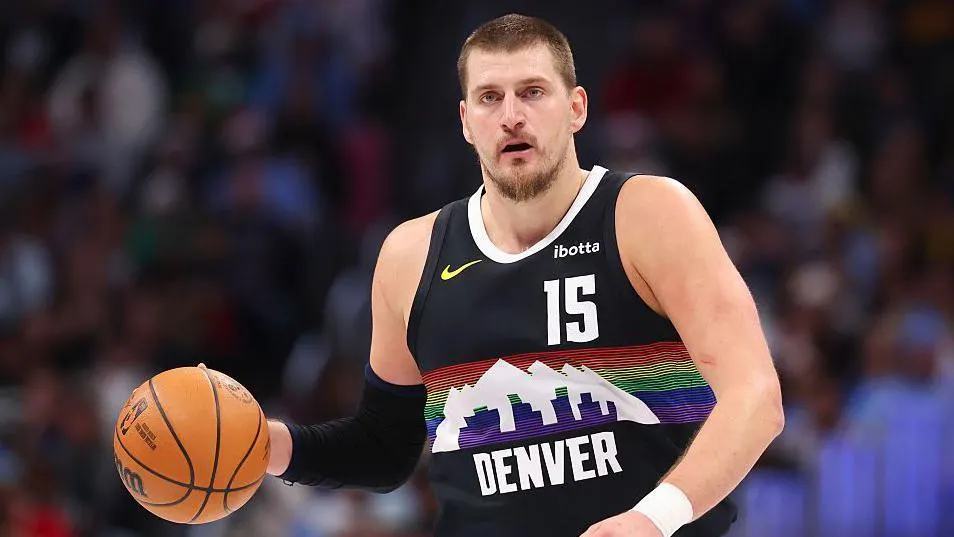
 Source: BBC Sport “Nikola Jokic: Why might the NBA 65-game rule stop him being named MVP?”
What is the 65 Game Threshold?
The 65 game threshold is a rule the NBA introduced in the 2023-24 season that sets a minimum number of games a player must play to qualify for major individual awards. To be eligible, a player has to play in at least 65 regular season games, which is roughly 80% of the full 82-game schedule, and play at least 20 minutes in those games.
If a player does not hit that mark, they are automatically disqualified from awards like Most Valuable Player, Defensive Player of the Year, All-NBA, and other end-of-season honors no matter how good they were when they did play. The rule is not about minutes or performance over a stretch; it is purely about availability. You either play enough games, or you do not qualify.
Why Did the NBA Introduce This Rule?
.webp) Image credit: NBA.com / Getty Images. Used for editorial purposes.
Image credit: NBA.com / Getty Images. Used for editorial purposes.
The rule came in as a response to a trend the league had been dealing with for years: star players sitting out during regular season games. As sports science improved and load management became more common, teams started prioritizing health and playoff readiness over grinding through all 82 games. They would start sitting their best players during games where the winner did not matter, and players themselves would tell the team they do not want to play back-to-backs or because they are “tired”.
Players began sitting back-to-backs, resting against weaker opponents, or being ruled out for general fatigue. From a basketball perspective, this was often reasonable. Star players carry a heavier physical load, face more defensive attention, and are more prone to wear and tear over the course of a long season.
From a fan and business standpoint, however, it did not always sit right. Fans were still paying full price for tickets and tuning into nationally televised games, only to find out sometimes shortly before tip-off that the league’s biggest names would not be playing. While the NBA later introduced reporting rules to give fans more transparency around player availability, the core issue remained: a game without stars does not carry the same value.
.webp) Source: SeatGeek - “NBA Tickets Guide: Premium Perks, Costs for Courtside, Suite and Club-Level Seats.” Photo via SeatGeek.
Source: SeatGeek - “NBA Tickets Guide: Premium Perks, Costs for Courtside, Suite and Club-Level Seats.” Photo via SeatGeek.
Ticket prices often fluctuate based on who is playing. A matchup featuring a team’s best players typically costs more than one where they are resting. Yet fans do not always get that reflected upfront, even though entertainment and star power are a major part of what they are paying for.
The NBA’s Solution
The NBA’s solution was to tie availability to recognition. By making awards and contract bonuses dependent on games played, the league tried to realign incentives. The idea was: if players want legacy-defining honors, they need to be on the court consistently throughout the season. More stars playing more games means better regular-season value, stronger TV ratings, and fewer nights where fans feel shortchanged.
Injuries Are Taking Over the League
.webp) Source: People.com - “Tyrese Haliburton Injured Minutes into Game 7: ‘No, No!’”. Photo via People.com / Getty Images.
Source: People.com - “Tyrese Haliburton Injured Minutes into Game 7: ‘No, No!’”. Photo via People.com / Getty Images.
Injuries have always been part of the NBA. That is nothing new. What is new is how often star players are missing significant chunks of the season. This past year alone, we have seen extended absences from players like Tyrese Haliburton, Jayson Tatum, Damian Lillard, and Kyrie Irving. While injuries themselves are not the headline, the impact they now have under the 65-game threshold is. It is becoming increasingly uncommon for elite players to reach 70+ games in a season. As a result, many of the league’s most impactful players are being pushed out of award conversations not because they were not good enough, but because they did not get to play and not due to choice.
That raises a real problem: the most deserving players are not always eligible for recognition anymore.
Missing the Story of the Season
Now, I know that the guys I named above are out for the whole season, and the counterargument will be that they have next year to try and reach those awards and honors again. But what about the guys who are still playing this season and are still out of contention?
The issue with a hard threshold is that it can distort how a season is remembered.
Take players like LeBron James, Victor Wembanyama, Giannis Antetokounmpo, and Kawhi Leonard. All of them have already missed extended time and will not qualify to win any awards this season. Wembanyama for the foreseeable future will be the best defensive player in the league, but he has zero DPOY awards to show for it.
But is it realistic to think about the 2025-26 NBA season without those names? You simply cannot tell the story of that year without mentioning them.
.webp) Source: NBA.com - “Victor Wembanyama returns to give Spurs emotional edge against Thunder in NBA Cup Semifinals win”.
Source: NBA.com - “Victor Wembanyama returns to give Spurs emotional edge against Thunder in NBA Cup Semifinals win”.
For example, there is no version of the 2025-26 season narrative that does not include the San Antonio Spurs and Wembanyama beating the Oklahoma City Thunder three times, effectively ending their push to break the Golden State Warriors 73-9 record. That mattered. It was a huge storyline.
Yet under the current rules, performances like that risk being erased from award history. Your typical NBA fan will not even think twice after not seeing Wembanyama’s name in the honors list.
The MVP Race
This issue hits home for me because my MVP pick this season may not receive any recognition.
Nikola Jokic, a player who has historically been extremely durable, suffered a hyperextended knee, putting him on track to miss 17-18 games, right around the 65-game cutoff.
.webp) Source: Sports Illustrated - “NBA MVP Odds: Nikola Jokic Injury Leads to Shai Gilgeous-Alexander Becoming Overwhelming…”
Source: Sports Illustrated - “NBA MVP Odds: Nikola Jokic Injury Leads to Shai Gilgeous-Alexander Becoming Overwhelming…”
There is no basketball argument where 60 games of Jokic are not more impactful than a fringe All-NBA Third Team selection who barely meets the threshold. Yet the rule does not care about impact, dominance, or value per game. It only cares about the number.
That is where the system starts to feel off.
To be clear, I understand why the rule exists and I agree with its intention.
- Incentivizing players not to opt into unnecessary load management is good.
- Protecting regular-season value matters.
- The league’s revenue is directly tied to star availability.
All of that makes sense.
But awards and All-NBA teams are more than incentives; they are historical records. They act as a snapshot of who defined each season. When that snapshot excludes players like Jokic or Wembanyama, it starts to feel incomplete.
A season remembered without some of its most dominant forces does not sit right with fans and increasingly, it does not sit right with media either.
Questions This Rule Raises
As I was writing this article, a few bigger questions kept coming up, questions that go beyond just the 65-game threshold itself. Why have injuries become so common across the league? Is there room for an appeal system when a player clearly meets the spirit of the award but falls short of the games requirement? Are contract incentives unintentionally pressuring injured players to return too soon? And at a broader level, does the Collective Bargaining Agreement (CBA) need to be revisited as the league continues to evolve?
These are not easy questions, and there is not a single fix that solves all of them. But they highlight that the issue is not just about one rule, it is about how the league balances competition, business interests, and player health.
The Complexity
(7).webp) Source: Reddit (original image via Getty Images). Photo used for editorial purposes.
Source: Reddit (original image via Getty Images). Photo used for editorial purposes.
At the end of the day, the NBA is a business. That is something players, teams, and fans all recognize. But this situation sits at the intersection of multiple perspectives. There are league stakeholders concerned with revenue and viewership, players trying to protect their bodies and careers, and media tasked with defining legacy through awards and historical recognition. Any meaningful change to the 65-game rule has to account for all of these viewpoints. That is what makes this issue so complex and why a one-size-fits-all solution is not in the realm of possibilities.
Some Potential Solutions
-
A small appeal window below 65 games The most reasonable solution is introducing a limited buffer zone below the 65-game threshold, say within 5-7 games. If a player falls into that range due to a legitimate injury (not load management), their team could submit an appeal.
This would not guarantee award eligibility, but it would allow elite seasons to at least be considered. A panel made up of coaches, league staff, players, and media could decide whether the player’s season still meets the spirit of the award. Bias would always be a concern, but a chance at recognition is better than an automatic disqualification.
-
A weighted penalty for missed games Another improvement would be keeping the 65-game threshold in place, but treating missed games differently depending on the reason.
In this system:
- Games missed due to verified injuries would carry a smaller penalty.
- Games missed for load management or rest would count fully against the threshold.
Players would still need to reach a minimum number of games to qualify, but injuries would not be treated the same as elective rest. A player who misses time because of bad injury luck would not be punished as harshly as someone who routinely sits out healthy.
-
Separate awards from contract incentives A bigger structural issue is how awards are tied directly to money. Right now, missing the 65-game threshold does not just cost a player a trophy, it can cost them tens of millions of dollars.
.webp) Source: Basketball Forever - “The Biggest NBA Contracts and the Players About to Get Paid Even More.” Image via Basketball Forever.
Source: Basketball Forever - “The Biggest NBA Contracts and the Players About to Get Paid Even More.” Image via Basketball Forever.One possible fix would be removing the All-NBA requirement from supermax contracts. Players could still qualify for higher max salaries based on years of service or MVP voting placement, without awards being the sole gatekeeper. That way, the 65-game rule affects legacy and recognition, not financial security after an injury.
Why the NBA Probably Won’t Change Much
As logical as these ideas sound, the reality is that the NBA values clarity and consistency. Once rules are embedded in the Collective Bargaining Agreement, changing them becomes incredibly complicated.
Adjusting award eligibility impacts contract incentives, salary caps, luxury tax calculations, and league-wide revenue. On top of that, injuries are unpredictable, recovery timelines vary, and awards need to remain black-and-white to avoid endless debates.
The league prefers a clean rule even if it occasionally leads to imperfect outcomes.
Final Thoughts
This season may simply be a case of bad timing and bad luck. The 65-game rule exists for good reasons, and over time it may lead to a more accurate reflection of who defines each season. But in years like this one, it risks leaving out players who clearly shaped the league.
There may not be a perfect solution, but refining how availability is measured without abandoning the rule entirely could be a step forward.
Comments